
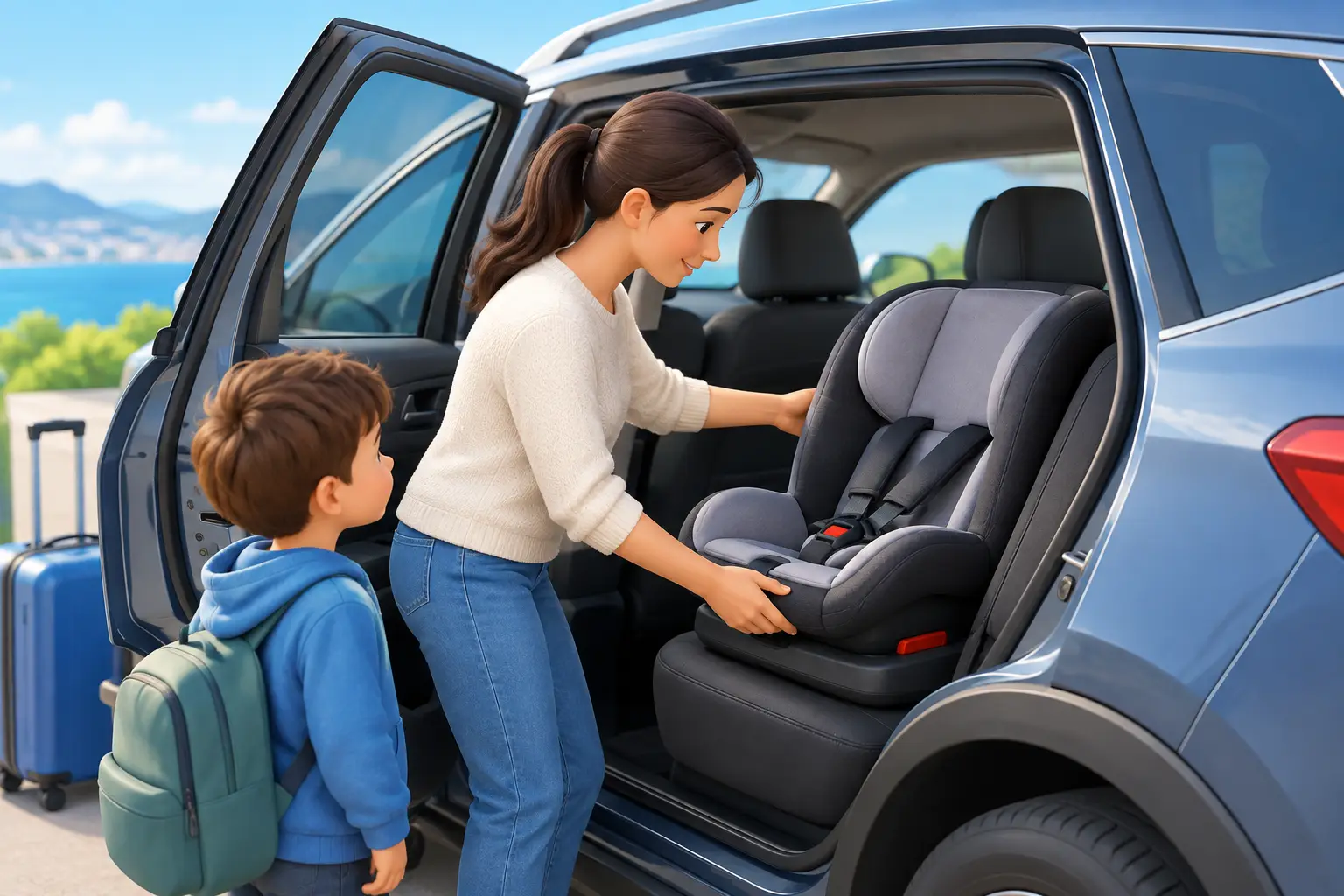
Traveling with children in Antigua should feel exciting, not like a last-minute logistics problem. Knowing how to add child seats to your rental reservation before you arrive helps your family leave the airport prepared, comfortable, and ready to travel safely on the island.
A child seat is not an accessory to sort out after your flight lands. It affects the vehicle you choose, the space available for luggage, and how easily everyone can settle in for the drive to your accommodation. Request it early, provide accurate details, and take a few minutes to check the installation before setting off.
How to Add Child Seats When Booking a Rental Car
The best time to add a child seat is during the initial reservation. Select your preferred vehicle first, then request the number and type of seats your family needs. If the booking form does not ask for a child’s age or size, include those details in your request or confirm them directly before your pickup date.
Be specific rather than simply asking for a “car seat.” A rear-facing infant seat, a forward-facing toddler seat, and a booster seat are designed for different stages. Your rental provider needs enough information to prepare the most suitable option and make sure the vehicle can accommodate it.
For each child, provide their age, approximate weight, and height. You should also state whether you need a rear-facing seat, forward-facing seat, high-back booster, or backless booster. Requirements vary by manufacturer and destination, so always follow the instructions on the specific seat supplied and the applicable local rules.
If you are traveling with more than one child, request each seat at the same time. This gives the rental team time to assign a vehicle with enough rear-seat space and the correct number of seat belts or anchor positions. A compact car may be convenient for two adults and one child, while a family with multiple seats may be more comfortable in an SUV or van.
Choose the Right Child Seat for Your Child
The correct fit matters more than choosing what looks most convenient. Children should remain in a seat that matches their current size and developmental stage, not move up simply because a booster takes up less room.
Infants and very young children generally need a rear-facing seat. This position supports the head, neck, and spine during a sudden stop or collision. Keep a child rear-facing for as long as the seat manufacturer’s height and weight limits allow.
Once a child has outgrown the rear-facing limits, a forward-facing seat with a harness may be appropriate. The harness should lie flat and fit snugly, with the chest clip positioned at armpit level when the seat design includes one.
Older children may use a booster seat when they meet the manufacturer’s minimum requirements. A booster raises the child so the vehicle’s regular lap-and-shoulder belt fits correctly. The lap belt should sit low across the upper thighs, while the shoulder belt should cross the center of the chest and shoulder, never the neck or face.
A child who is too small for an adult seat belt should not travel without a booster just because the trip is short. Island drives often include turns, hills, uneven road surfaces, and stops for beaches, restaurants, and sightseeing. Proper restraint is needed for every journey.
Make Sure Your Rental Vehicle Has Enough Space
Before confirming your reservation, consider more than passenger capacity. A vehicle listed for five passengers may technically have five seat belts, but fitting three child seats across the rear bench can still be difficult. Bulky rear-facing seats also take up front-to-back space, which may reduce legroom for the front passenger.
Think about the rest of your travel plans. If you are carrying a stroller, beach bags, a crib, or large suitcases, a larger trunk or cargo area can make a meaningful difference. Families traveling with two or more children often find that an SUV or van offers a more relaxed setup than trying to make everything fit into a small car.
If you are unsure what size vehicle to reserve, ask before booking. A straightforward conversation about the number of passengers, child seats, and luggage can prevent an uncomfortable pickup-day surprise. Yehudi Hire can help families select a vehicle that suits both their seating and storage needs.
Check the Seat Before You Drive Away
Even when a child seat has been requested in advance, take a few minutes at pickup to inspect it and confirm the fit in the vehicle. This is not a delay in your vacation. It is a practical safety check that gives you confidence for the road ahead.
First, check that the seat is clean, undamaged, and appropriate for your child’s size. Look at the label for height and weight limits, and ask for the manufacturer instructions if anything is unclear. Do not use a seat with visible cracks, a missing harness component, or a belt path you cannot identify.
Next, install the seat according to its instructions and the vehicle manual. Depending on the vehicle and seat, you may use the seat belt or lower anchors. Use one approved installation method unless the manufacturer specifically permits both. The seat should not move more than about one inch side to side or front to back when checked at the belt path.
For rear-facing seats, confirm the recline angle shown on the seat indicator. An angle that is too upright may allow a young child’s head to fall forward, while an angle that is too reclined can affect stability. For forward-facing seats, use the top tether when required and available, as it helps reduce forward movement in a crash.
Finally, place your child in the seat and adjust the harness. Remove thick jackets or bulky clothing first, since they can create a loose fit. The harness should be snug enough that you cannot pinch extra webbing at the shoulder.
Plan for Antigua Driving Conditions
Antigua is best explored at your own pace, but family travel works better with a little preparation. Driving is on the left side of the road, which can take a moment to adjust to if you normally drive on the right. Keep your first drive simple if possible, especially after a long flight.
Child seats should remain properly installed throughout the rental period. Avoid moving a seat between positions unless necessary, and recheck it after transferring it, folding a rear seat, or making a major adjustment. If a seat is removed for extra cargo space, reinstall it carefully before your child rides again.
Short drives still require the same care as longer ones. Whether you are traveling from the airport to your hotel, heading to a grocery store, or visiting a beach on the other side of the island, buckle children in before the vehicle moves. Adults should also wear seat belts on every trip, setting the standard for younger passengers.
Bring small comforts for the drive, such as water, sun protection, and familiar snacks, but keep loose items from becoming clutter around the child seat. A calm, organized vehicle makes it easier for the driver to focus and for children to stay comfortable between stops.
Questions to Confirm Before Your Trip
Before finalizing your rental, confirm that child seats are available for your travel dates and that the requested type matches your child’s needs. Ask whether installation assistance is available at pickup, particularly if you are unfamiliar with the vehicle or are traveling with multiple seats.
It is also wise to confirm the vehicle category, number of passengers, luggage capacity, pickup location, and any additional charges for child-seat rentals. Clear details before arrival make for a faster handover and fewer decisions after a flight.
If you prefer to bring your own seat, check your airline’s policies and make sure it is suitable for use with a vehicle seat belt. Your own seat may be familiar to your child, but it also adds luggage to manage. A rental seat can be the simpler option when you want to travel lighter, provided it is the right type and properly installed.
A well-planned child-seat request gives your family more freedom once you arrive. Reserve early, check the fit at pickup, and take the first drive at an easy pace so the only thing left to plan is where to explore next.


One Comment