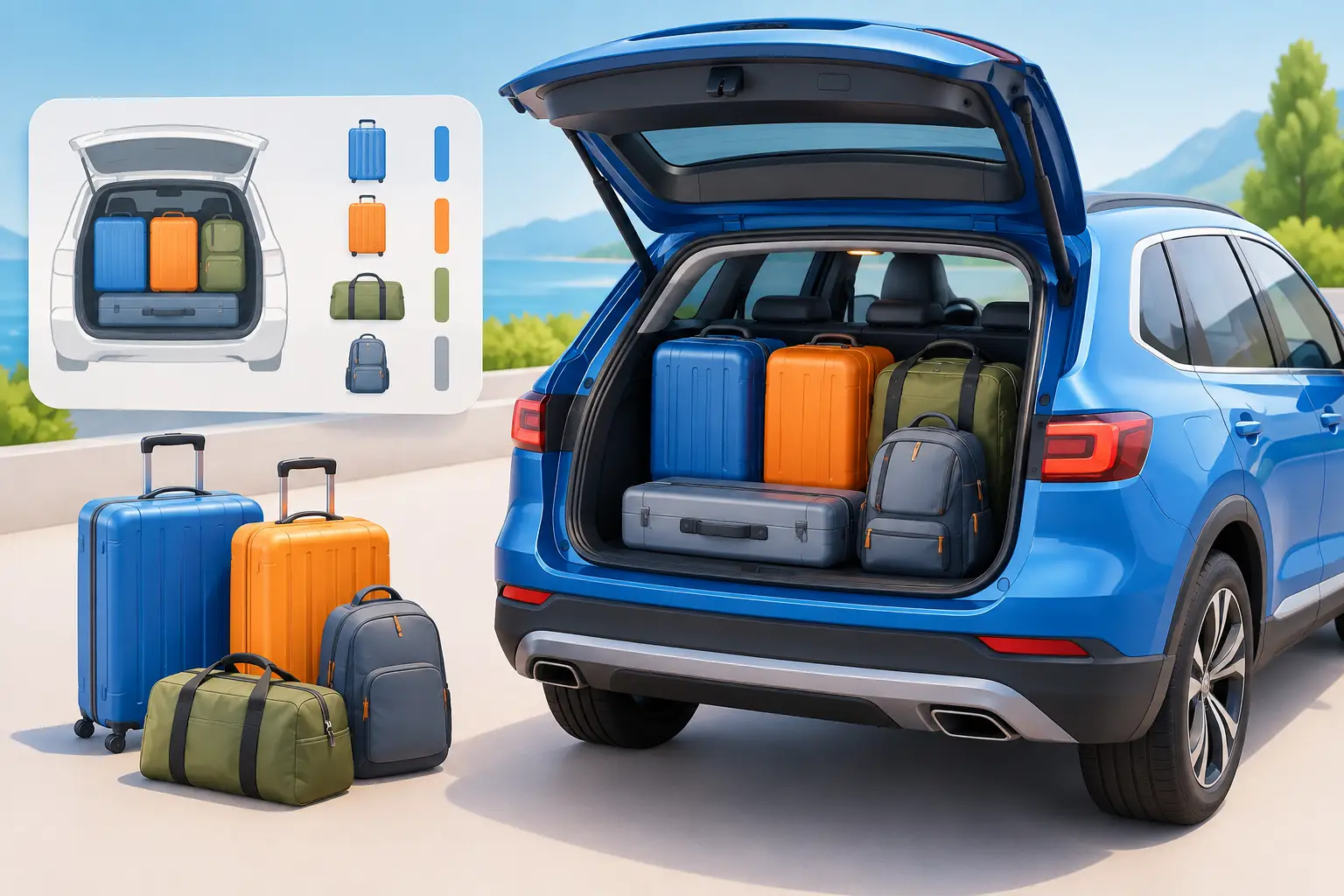
Landing in Antigua with four suitcases, two carry-ons, a stroller, and beach gear can make a vehicle that looked spacious online feel very small. This guide to vehicle luggage capacity helps you choose a rental that fits your people and your bags comfortably, so your first drive from the airport starts without packing puzzles.
The best choice is not always the largest vehicle. A couple staying near the beach may be perfectly comfortable in a small car, while a family of four can benefit from an SUV or van even if their daily driving is limited. The practical question is simple: how much of your trip will be spent carrying luggage, passengers, and equipment at the same time?
Start With People, Then Count Every Bag
Vehicle capacity is often described by passenger seats, but seats and luggage space must be considered together. A five-passenger vehicle can technically seat five adults, yet its trunk may not hold five large checked bags. If everyone is traveling with full-size suitcases, comfort usually means leaving at least one seat unused or choosing a larger class of vehicle.
Before reserving, count the items that will travel with you on arrival and departure day. Include checked luggage, carry-ons, personal bags, coolers, strollers, car seats, mobility equipment, and any larger items such as a golf bag. Beach bags and a small grocery shop may not seem significant when you pack at home, but they take up room quickly once everyone is in the vehicle.
A useful rule is to plan for the largest load of the trip, not the average day. You may only have all the suitcases in the car twice, but those are the times when space matters most. Choosing the right vehicle early avoids having bags on laps or blocking the rear window after a long flight.
A Guide to Vehicle Luggage Capacity by Vehicle Type
Exact trunk dimensions differ by model, so capacity descriptions should be treated as practical estimates rather than guarantees. Soft-sided bags can sometimes fit more easily than rigid cases, while oversized luggage can reduce the usable space considerably.
Small Cars
Small cars are a sensible choice for solo travelers and couples who pack light. They generally work well for two adults with two medium suitcases and a couple of carry-ons. They are easy to park and can be a budget-friendly option for travelers who plan to spend most days exploring beaches, restaurants, and local sights with only a few essentials onboard.
The trade-off is limited trunk space. A small car may be tight for two large hard-shell suitcases, and it is rarely the right fit for a family using a stroller or car seat. If your luggage is bulky, move up a size rather than relying on the rear seat for bags.
Sedans
A sedan provides more passenger room and a larger enclosed trunk than a small car. It often suits two to four travelers with a moderate amount of luggage, such as three medium bags, several carry-ons, and day items. For couples who prefer extra space or business travelers carrying work equipment, a sedan can offer a more comfortable balance.
Remember that the trunk opening can affect how easily luggage fits. Two bags with similar volume may not stack the same way, especially if one is wide or rigid. Keeping one smaller bag accessible in the cabin also helps with documents, medications, and valuables.
SUVs
An SUV is often the most flexible option for families, groups of three or four, and travelers bringing beach equipment. With the rear seats in use, many SUVs can accommodate several suitcases and day bags. When fewer people are traveling, folding rear seats can create significantly more cargo room.
That flexibility comes with a consideration: using folded seats for luggage reduces the number of passengers you can carry. An SUV may be ideal for four people with lighter bags, or two to three people with more luggage, but it may not comfortably carry five adults and five large suitcases at once. Plan around the actual combination, not the maximum passenger number printed in a vehicle description.
Vans
For larger families, wedding groups, friends traveling together, or guests with substantial luggage, a van is usually the most comfortable answer. Vans provide more seating and a dedicated rear cargo area, making them useful for airport pickup, multi-stop transfers, and trips where everyone wants room to sit normally.
A van can reduce stress when children are traveling with car seats or when guests want to keep beach gear and groceries with them throughout the day. It may cost more than a smaller rental, but the added space can be worthwhile when it prevents the need for a second vehicle or a separate transportation arrangement.
Consider How You Will Use the Vehicle in Antigua
Your airport-day needs are only one part of the decision. Think about where you will stay, how many people will travel together, and what you plan to carry during the week. If you are staying in one place and taking short drives, a smaller vehicle can work well after luggage has been unpacked. If you plan to explore different parts of the island daily, extra cargo room makes beach towels, water, snorkeling gear, and shopping more manageable.
Families should also account for car seats. A car seat takes up more usable room than a standard passenger seat, particularly in a compact vehicle. Rear-facing seats may require additional front-to-back space. If you need more than one car seat, an SUV or van generally provides a more comfortable setup for both children and adults.
Antigua is best enjoyed with the freedom to stop where you want. That freedom feels much better when you can store belongings securely and keep the cabin clear. Avoid stacking bags above the seatbacks or placing loose items where they can shift while driving.
Pack Smarter Before You Choose a Rental
You do not need to travel with minimal luggage to choose wisely, but a few packing decisions can make a meaningful difference. Soft duffel bags are easier to fit around other items than large hard-shell suitcases. Packing beach items into one flexible tote rather than several loose bags keeps the cargo area organized. If you are traveling as a group, agree in advance on how many large bags each person will bring.
For a longer stay, consider whether you truly need to carry all items on every outing. Leave nonessential luggage at your accommodation and use the vehicle for daily essentials only. Keep passports, travel documents, medication, electronics, and one change of clothing in accessible carry-on bags rather than burying them in the trunk.
It is also wise to avoid assuming roof storage is available. Not every rental vehicle has roof rails or is equipped for external carriers, and loading luggage outside the vehicle may affect visibility, security, and comfort. Choose a vehicle with enough internal capacity for your needs from the start.
Ask the Right Questions Before Booking
If you are between two vehicle sizes, a quick review of your party and luggage usually makes the answer clear. Share the number of travelers, the number and approximate size of bags, and whether you need car seats. This is especially helpful for airport arrivals, when everyone and everything must fit at once.
At Yehudi Hire, clear trip details help match visitors with a practical option for their Antigua stay. A dependable recommendation should account for comfort, not simply whether bags can be forced into the vehicle.
Do not forget to leave a little room for the return journey. Souvenirs, local food items, and extra beach purchases can add up. A vehicle that has a small amount of spare cargo space on arrival gives you more flexibility throughout your trip.
Choose for comfort first, especially when traveling with children, larger bags, or a group. The right rental gives everyone a proper seat, keeps luggage secure, and lets you focus on the island roads and the places you came to enjoy.